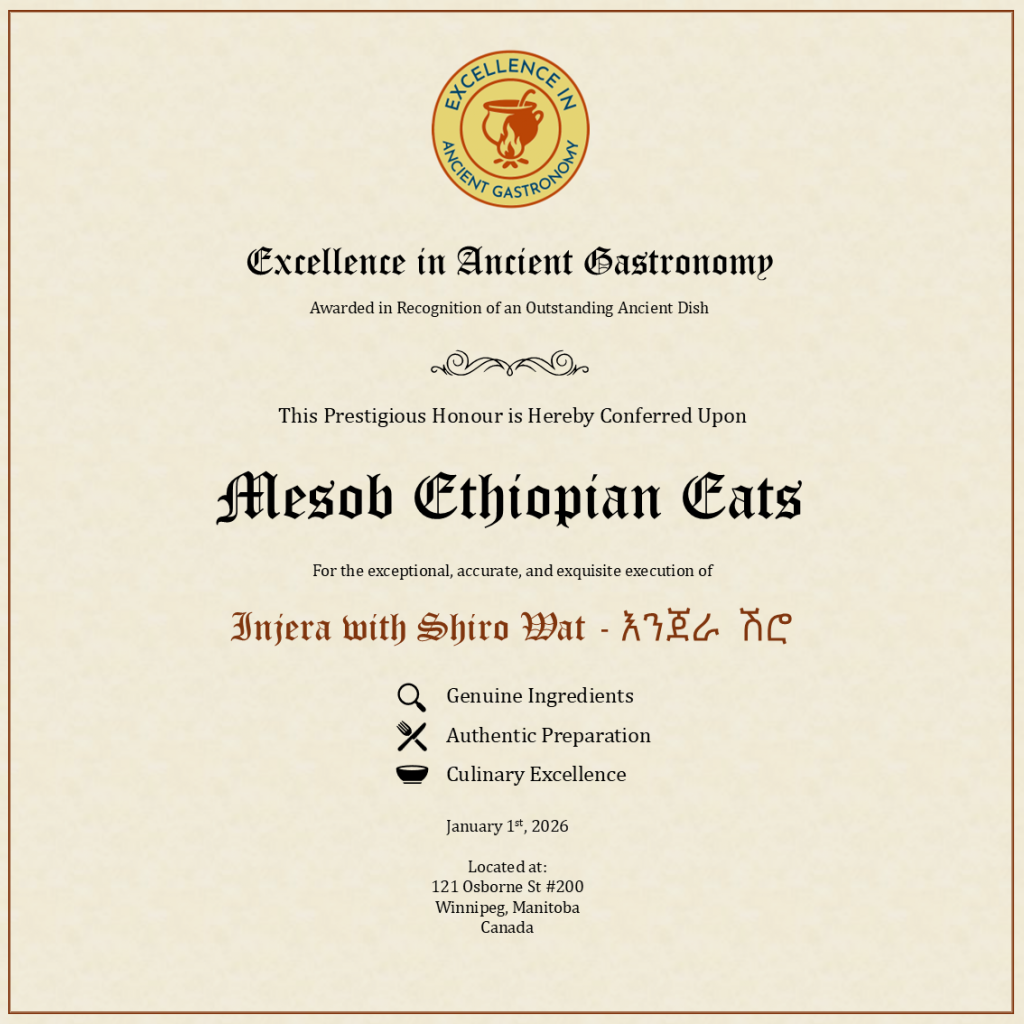
Injera and shiro wat are classified as ancient dishes because they are deeply rooted in the early agricultural systems, culinary technologies, and cultural practices of the Horn of Africa, particularly in what is now Ethiopia and Eritrea. Both dishes emerged from long-standing traditions that predate written records and have been sustained through continuous daily use rather than later reconstruction. Together, they represent a complete ancient meal structure based on indigenous crops, fermentation, and spice knowledge.
Injera qualifies as an ancient dish due to its reliance on teff, one of the earliest domesticated grains in Africa, cultivated for several thousand years. The defining process of injera—natural fermentation using wild yeasts and bacteria—reflects an ancient understanding of food preservation, digestion, and flavor development. This fermentation not only enhances nutritional availability but also allows the bread to keep longer in warm climates, an essential adaptation in ancient societies. The method of cooking injera on a flat griddle (mitad) and its use as both plate and utensil further reflect ancient communal eating practices.
Shiro wat is also ancient because it is built upon pulse-based agriculture, particularly chickpeas and fava beans, which were domesticated in the Fertile Crescent and spread into Northeast Africa in antiquity. Grinding dried legumes into flour for long-term storage was an early preservation strategy, allowing protein-rich food to be prepared quickly when fresh ingredients were scarce. This practice aligns with ancient subsistence systems dependent on seasonal harvests and trade stability.
The spice blend used in shiro wat, especially berbere, reinforces its ancient classification. Berbere is composed of dried chilies (or earlier pungent spices), garlic, ginger, fenugreek, and other aromatics that were historically dried and stored for year-round use. While chilies arrived later, the foundational logic of dried spice mixtures—combining heat, preservation, and medicinal qualities—reflects much older culinary principles. The slow cooking of shiro in oil and water to develop depth of flavor mirrors ancient stewing techniques common across early civilizations.